
DDLS · egocentric trades data
Training data from the trades, seen through their eyes.
Head-camera recordings of electricians, plumbers and carpenters on real jobs, turned into hand, object and task data for robot learning, and checked by replaying every session in physics.
See the data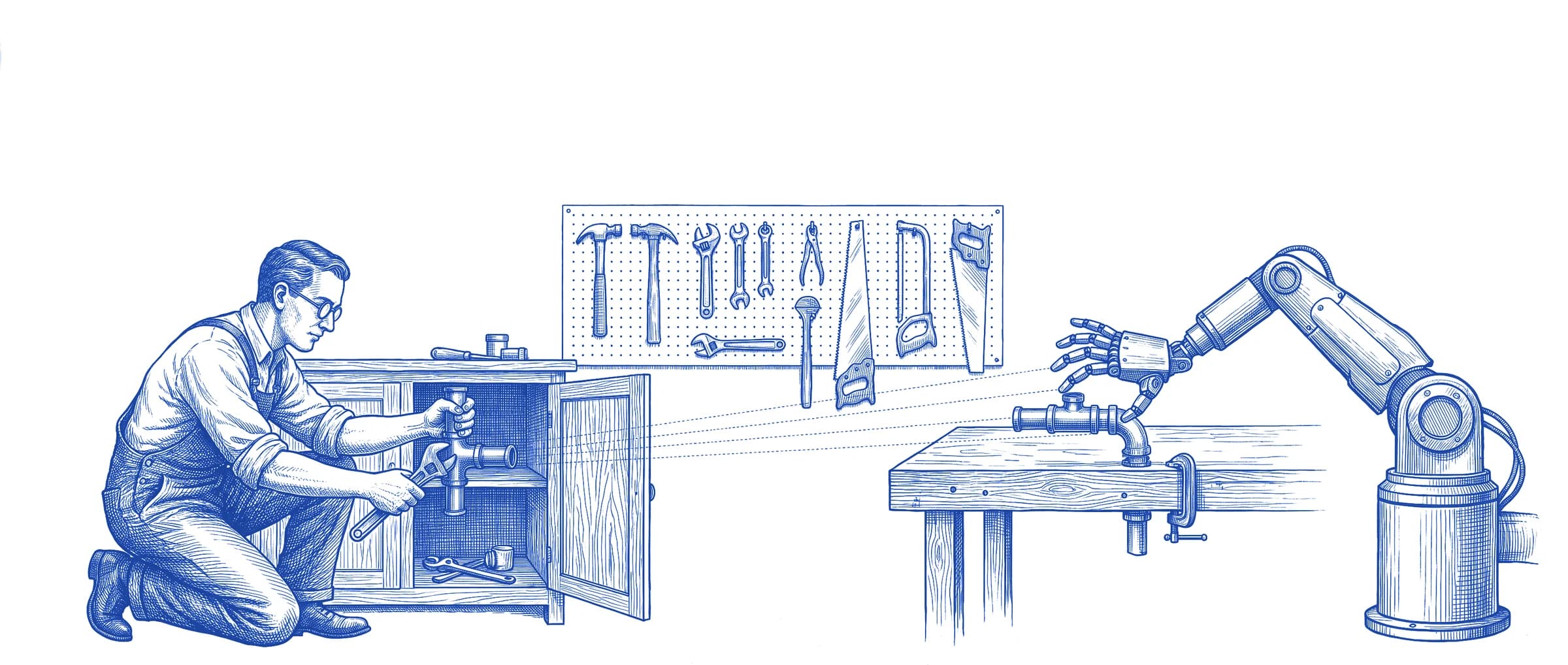
Pl. IThe plumber and the robot, the same grip.
Egocentric
Seen from the worker's own eyes.
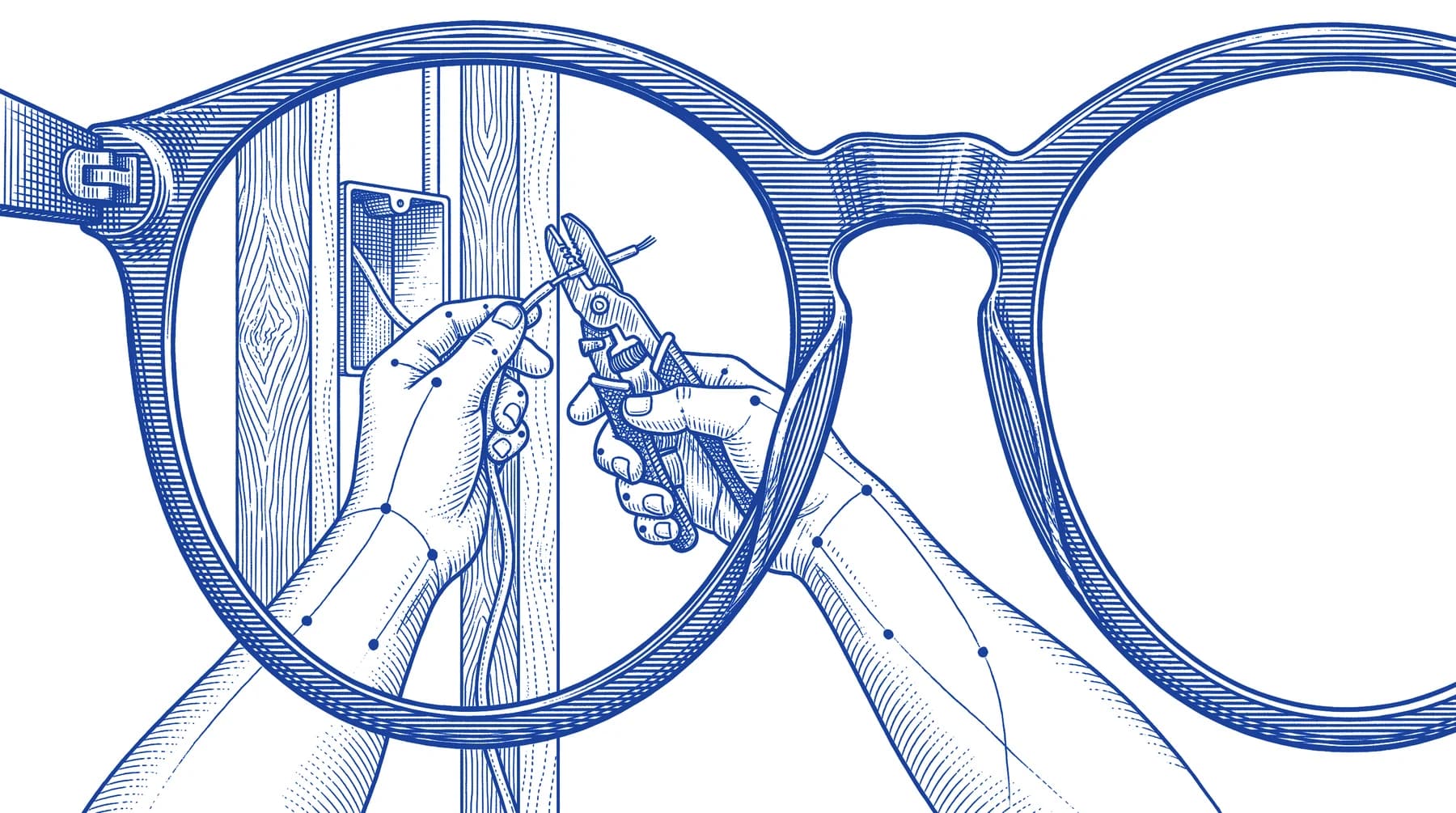
A small camera in the bridge of the safety glasses tradespeople already wear. It sees what they see, at the distance and angle a robot's own camera will: their hands, their tools and the work in front of them.
- Real job sites
- Kitchens, panels and framing on paid jobs, not a staged lab.
- Licensed trades
- Electricians, plumbers and carpenters doing the work they're trained for.
- Hours, not clips
- Whole tasks from setup to clean-up, redos and interruptions included.
Pl. IIThrough the glasses: the wearer's own hands at the box.
What each session becomes
The hands, the steps and the rules.
Every session is turned into what a robot policy learns from: where both hands are in every frame, what they hold, what step they're on and whether the work was done safely.
- Hands
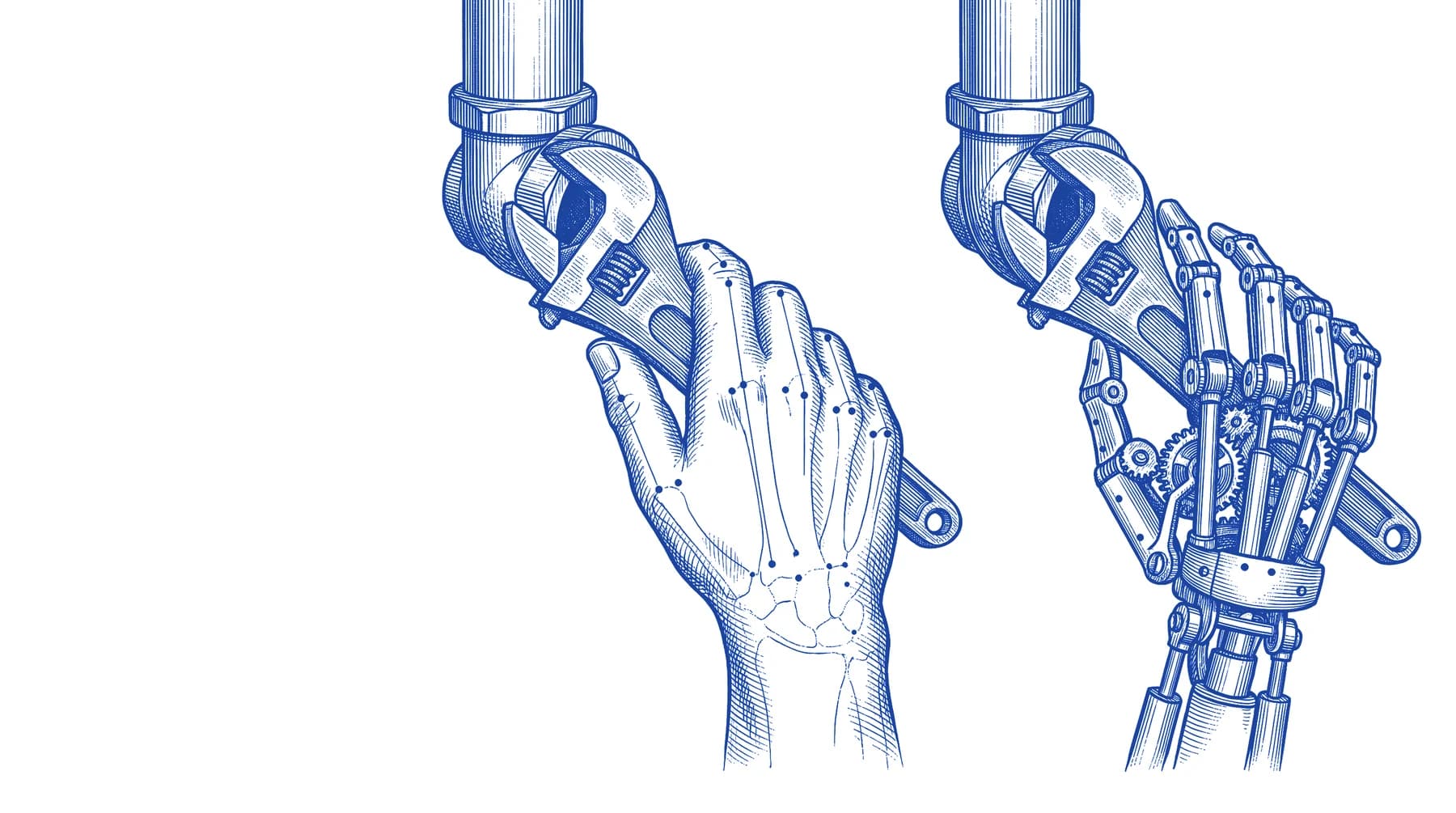
- Both hands as 21 keypoints per frame, in camera and world, with per-frame validity.
- Task timeline
- Steps with start and end, tools, hands and order. Doubtful ones are confirmed by the worker.
- Practice checks
- Whether the work followed the safety rules that apply, each cited to its source.
Pl. IIIThe same grip, by hand and by robot.
Checked in physics
If the hands can't do it in physics, it doesn't ship.
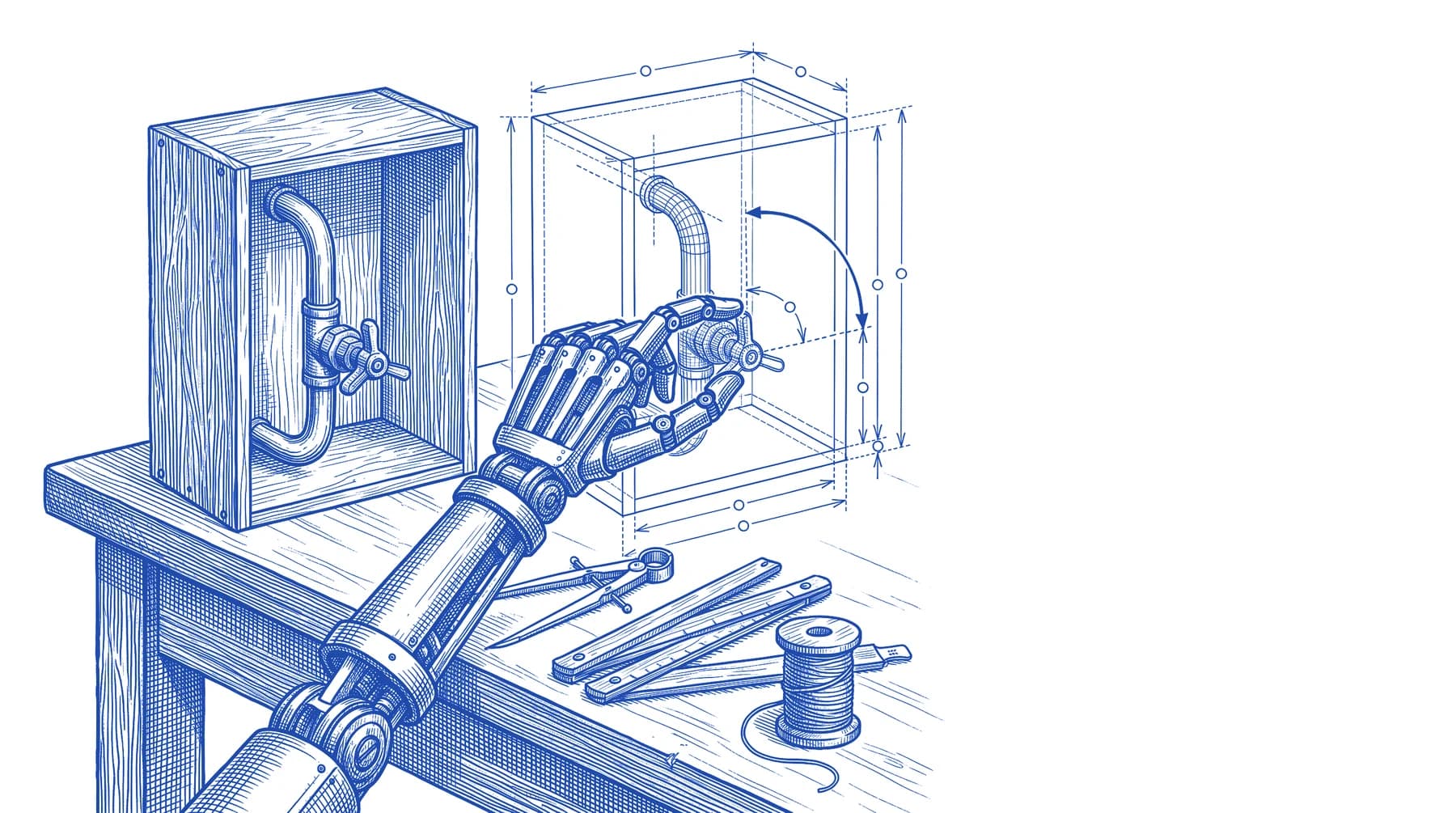
Every session is rebuilt as a MuJoCo scene, and the worker's own hands replay it on the surfaces and objects they touched. No assists, welds or teleports.
- Replayed, not assumed
- A session ships only when its hands can do in simulation what the video shows.
- Objects get exact
- A class placeholder first, then the make and model, each one a new version.
- Re-exported, not patched
- When what a dataset used changes, the dataset is exported again.
Pl. IVThe cabinet, and its measured twin.
Measured, not guessed
Every number says where it came from.
Sizes, masses, frictions and camera settings each carry a value, a range and a source. You can see which were measured on site and which are still assumptions.
- Measured or published
- Taken on site, or from the maker's own sheet.
- Fitted
- Solved from the video and the replay, with the range it was solved to.
- Assumed
- Marked as assumed, so you know what to test before you rely on it.
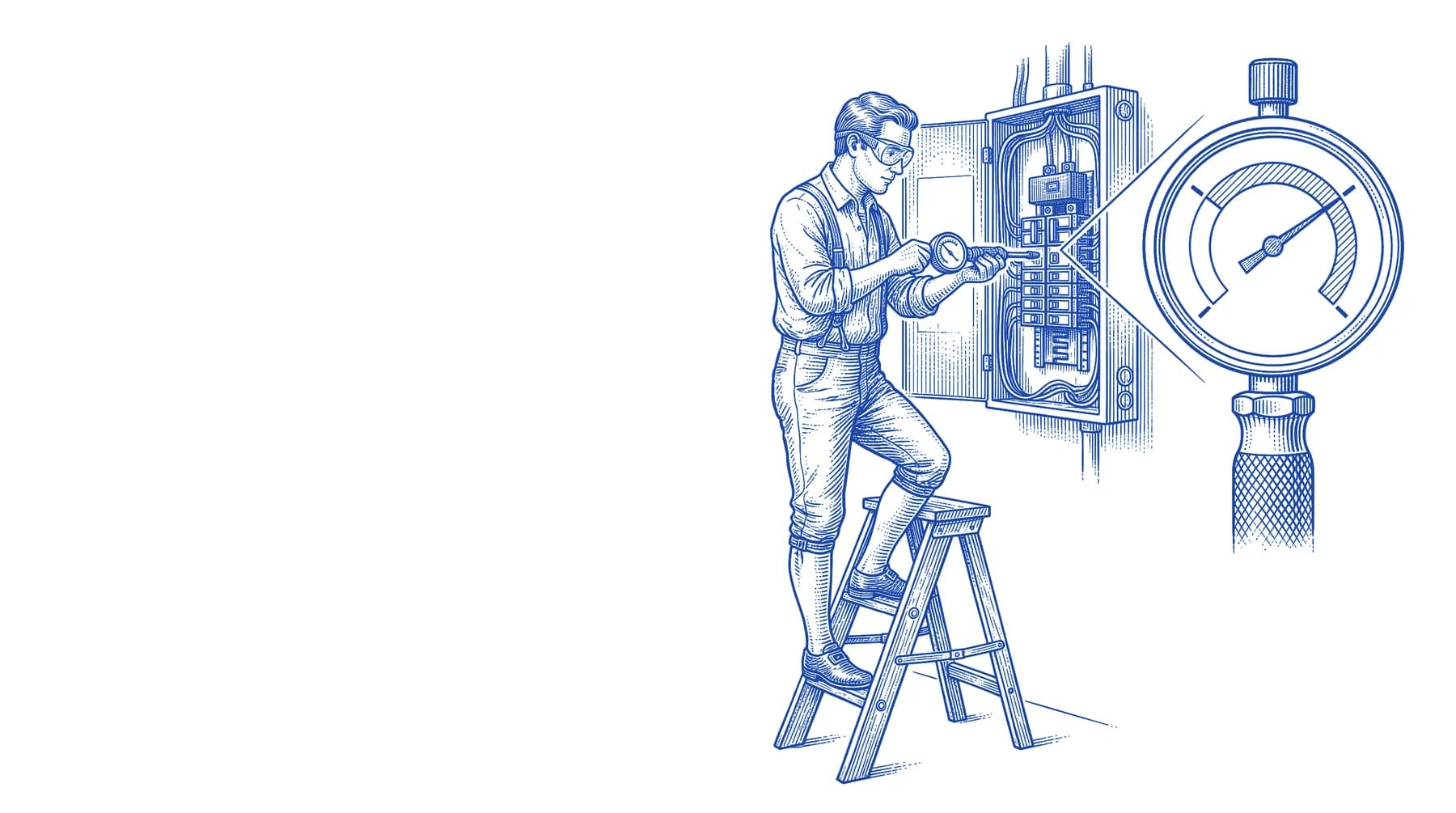
Pl. VTorqued to spec, and the gauge to show it.
In development
The first sessions are being recorded.
On job sites with a New Jersey contractor. Every worker signs an agreement covering the use, is paid for each hour and reviews their own sessions first. Ask for a sample when they’re ready.
What a sample holds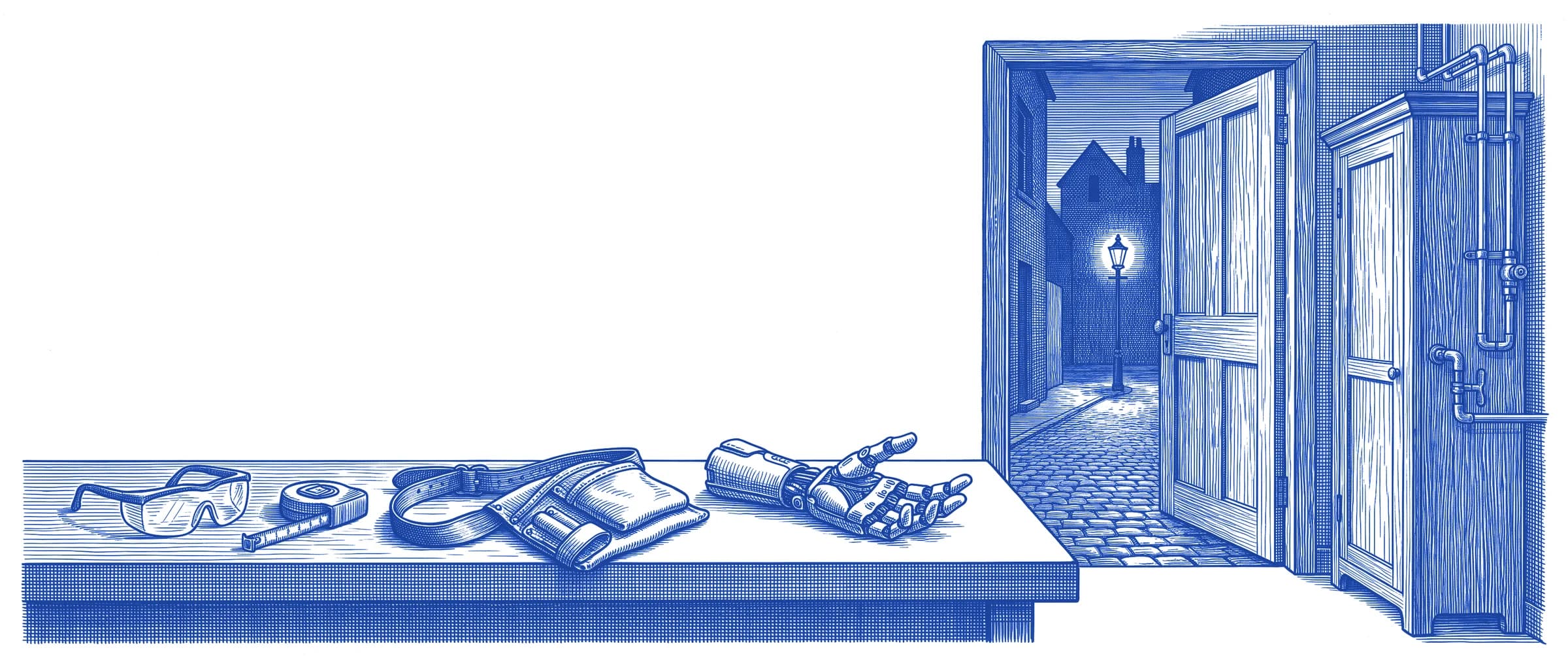
Pl. VIEnd of the day: the tools down, the session uploaded.